Reviewed by the CN Physiotherapy clinical team · 8 min read
Osteoarthritis (OA) is the most common form of arthritis and a leading cause
of joint pain, especially in the knees and hips. While there’s no cure, the
evidence is clear and encouraging: the right exercise and education are the
most effective first-line treatment — often more so than medication or
surgery for many people.
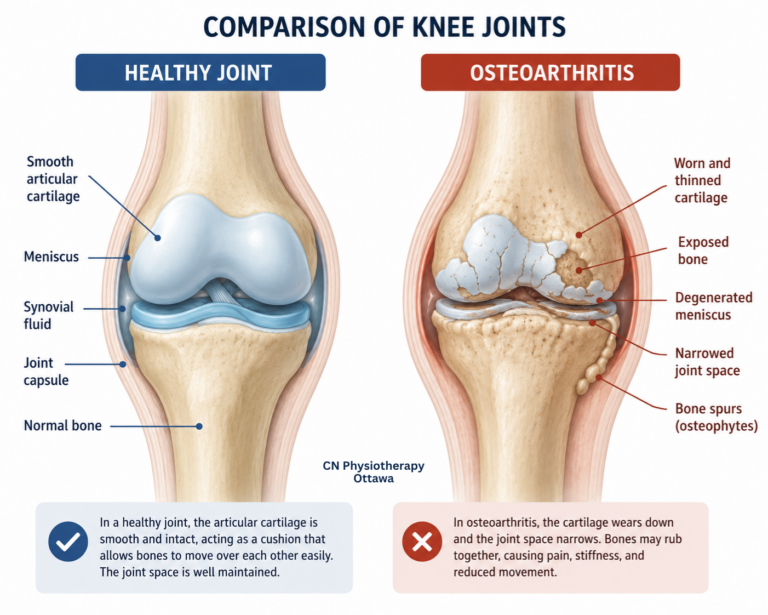
In osteoarthritis, the protective cartilage in a joint gradually
changes and thins.
What is osteoarthritis?
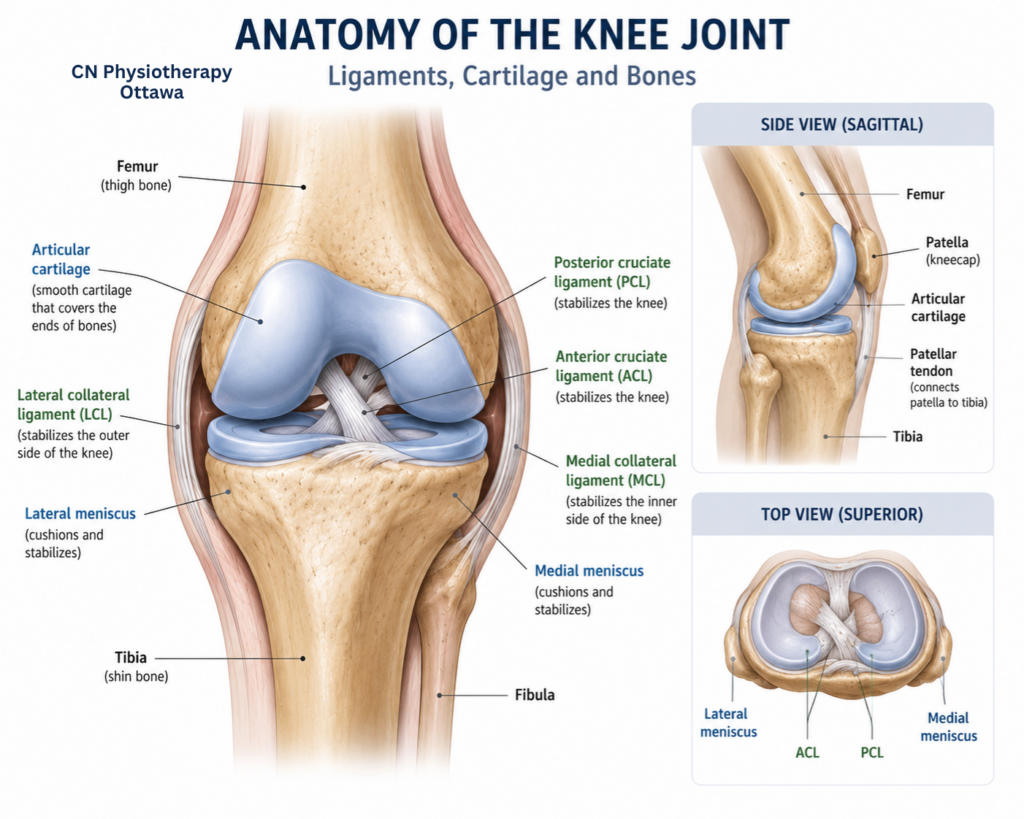
Osteoarthritis develops when the smooth cartilage that cushions the ends of
bones in a joint gradually changes and thins, and the whole joint —
including bone, ligaments, and surrounding muscle — adapts over time. It
most often affects the knees, hips, hands, and spine. Importantly, the
amount of change seen on an X-ray often does not match how much pain a
person feels — which is why treatment focuses on function, not just imaging.
Common symptoms
- Joint pain that’s often worse with activity and eases with rest
- Stiffness, especially first thing in the morning or after sitting
- Reduced range of movement or a feeling of the joint “grinding”
- Mild swelling or occasional flare-ups
- Weakness in the muscles around the joint
See your clinician if a joint becomes hot, red, and very swollen, if pain
is severe and constant, or if you have unexplained weight loss or fever —
these may point to something other than osteoarthritis.
Why exercise is the leading treatment
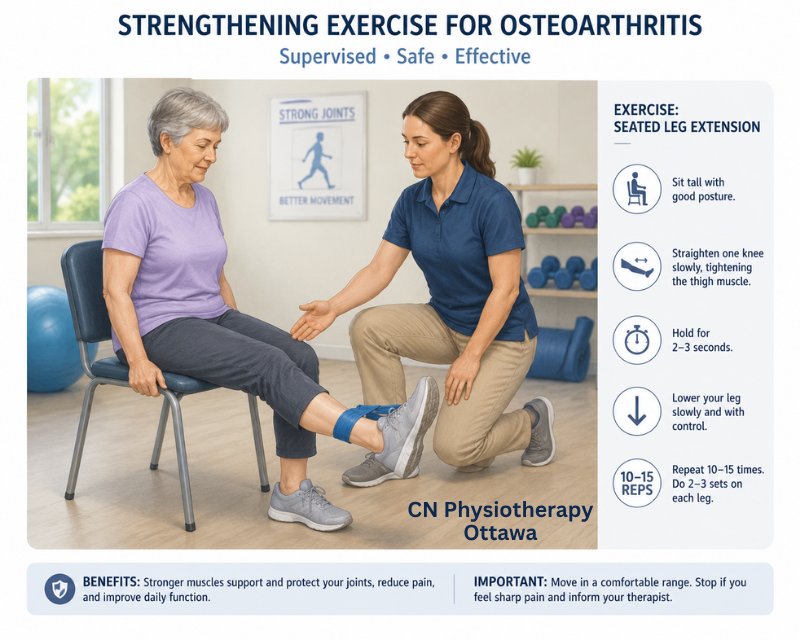
It’s a common myth that exercise “wears out” an arthritic joint. The
opposite is true: appropriate exercise strengthens the muscles that support
and offload the joint, keeps it nourished and mobile, reduces pain, and
improves quality of life. National and international guidelines recommend
exercise and education as the core, first-line treatment for hip and knee
osteoarthritis — before, or alongside, medication.
The GLA:D program
GLA:D (Good Life with OsteoArthritis: Denmark) is an internationally
recognised, evidence-based program for hip and knee osteoarthritis,
available across Canada and delivered by certified physiotherapists. It
combines patient education sessions with a structured program of
neuromuscular exercises — typically run as group sessions over about six
weeks. Research on GLA:D shows real benefits: reduced pain intensity,
improved quality of life and physical function, fewer painkillers, and less
sick leave compared with the year before starting.
Ask us whether a structured education-and-exercise program like
GLA:D is right for you — it’s one of the best-evidenced ways to take
control of osteoarthritis.
See which
location
is closest to you!
How physiotherapy helps
- Individualised exercise — strengthening, mobility, and aerobic activity
matched to your joints and goals. - Education and self-management — understanding OA, pacing activity, and
managing flare-ups with confidence. - Weight and lifestyle guidance — even modest weight loss can
meaningfully reduce load and pain in the knees and hips. - Pain-management strategies and advice on aids or footwear where
helpful. - Pre- and post-surgery rehabilitation for those who do go on to joint
replacement.
🎥 Watch: exercises for hip & knee osteoarthritis
Living well with osteoarthritis
Osteoarthritis is a long-term condition, but it is very manageable. People
who stay active, keep their muscles strong, maintain a healthy weight, and
learn to handle flare-ups often live full, comfortable lives — and many
delay or avoid surgery altogether. The key is to start, keep moving, and get
the right guidance.
Frequently asked questions
Is it safe to exercise with osteoarthritis?
Yes — exercise is a first-line treatment. It does not wear the joint
out; it strengthens the supporting muscles, reduces pain, and improves
function. Some discomfort during exercise is acceptable and usually
settles.
What is the GLA:D program?
GLA:D is an evidence-based education and neuromuscular exercise program
for hip and knee osteoarthritis, delivered by certified
physiotherapists. Studies show it reduces pain, improves quality of
life, and lowers painkiller use.
Will I need a joint replacement?
Many people manage osteoarthritis well for years with exercise,
education, and lifestyle changes, and may delay or avoid surgery. Joint
replacement is considered when symptoms are severe and conservative
care no longer provides enough relief.
Take control of joint pain
Our physiotherapists can build an exercise and education plan — including
GLA:D where suitable — to help you move better and hurt less.
We offer:
- Personalised
physiotherapy
assessments - Targeted sciatica treatment programs
- Exercise plans tailored to your daily routine
- Direct billing to most insurance providers
📅
Book an appointment today
and take the first step toward lasting
osteoarthritis relief Ottawa residents trust.